

Assembling Frankenstein
Why I Created and Published a New Edition of the 1818 Text

There’s something fitting about spending hours designing a book about creation—about choosing each font, measuring each margin, placing each illustration with the same obsessive attention that Victor Frankenstein brought to his own work. Though I hope my results proved less catastrophic.
I just finished designing, laying out, and publishing an edition of Frankenstein, and I need to talk about why every choice—from the 1818 text to the anatomical illustrations to the composite horror of the cover—matters.
Victor’s Culpability: Why the 1818 Text Is Essential
Here’s the thing about the 1831 revision most people read: it lets Victor off the hook.
When Mary Shelley revised Frankenstein thirteen years after its initial publication, she’d lived through unimaginable loss—the deaths of three of her children, the death of Percy Shelley, societal judgment, and financial precarity. The 1831 edition reflects that weight. She added fatalistic elements, suggestions of destiny, Victor as victim of forces beyond his control. It’s a different book, and yes, it contains passages of extraordinary literary beauty worth reading.
But the 1818 text? The 1818 text refuses to let Victor claim victimhood. In the original, Victor has full autonomy. His choices are his own. His decision to abandon the Creature the moment it opens its eyes—that’s on him. His refusal to create a companion—that’s a choice, not fate. His inability to take responsibility for what he’s made—that’s the entire horror of the book.
The first edition gives us a Victor with complete agency and, therefore, complete culpability. That’s not a minor difference. That’s the difference between a story about what happens when we refuse to be accountable for our creations and a story about tragic circumstances. One is urgent. One is comfortable. We need the urgent version.
Design as Argument
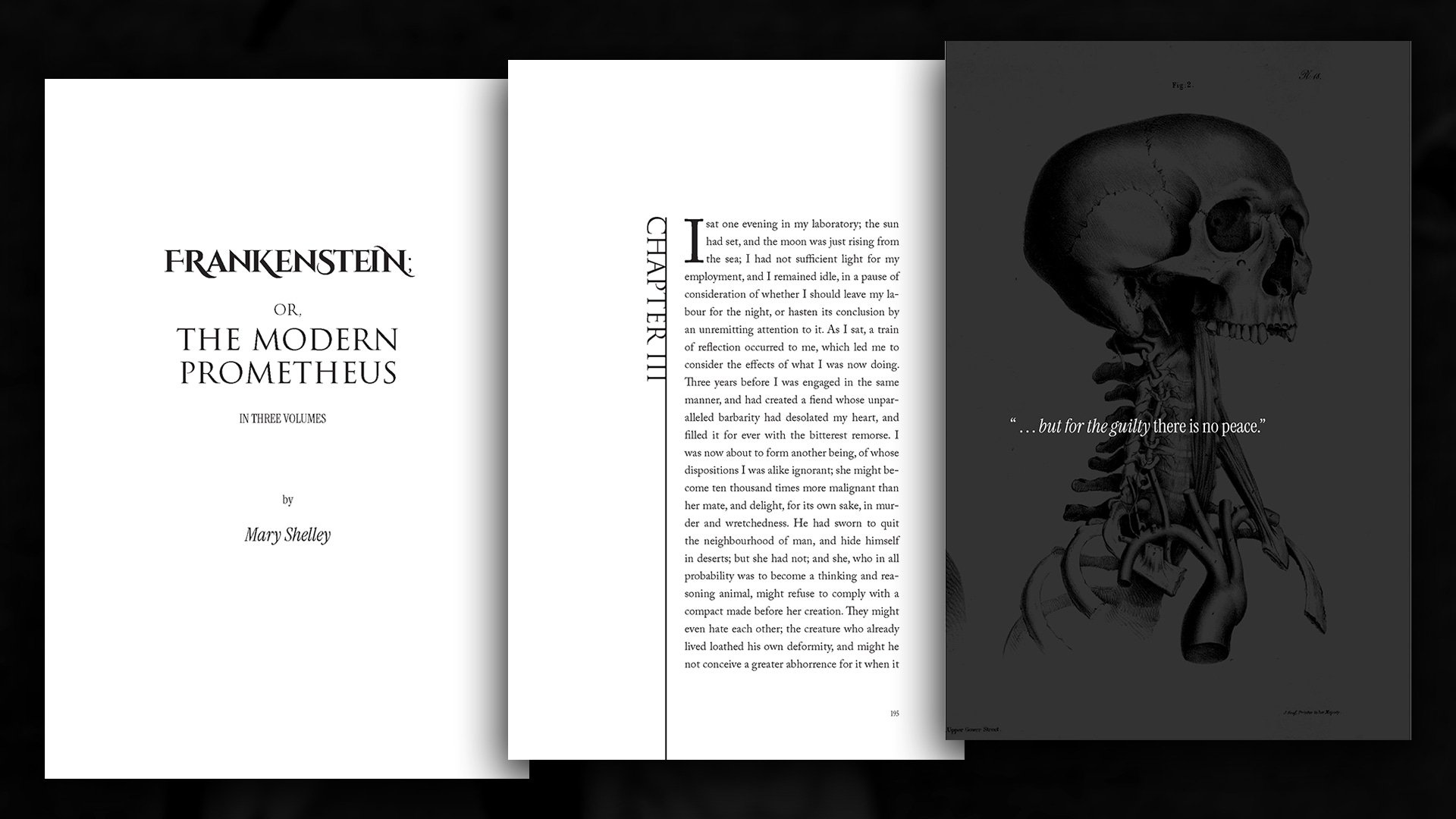
I designed this book with a specific thesis: the visual experience of reading shapes how we understand the text.
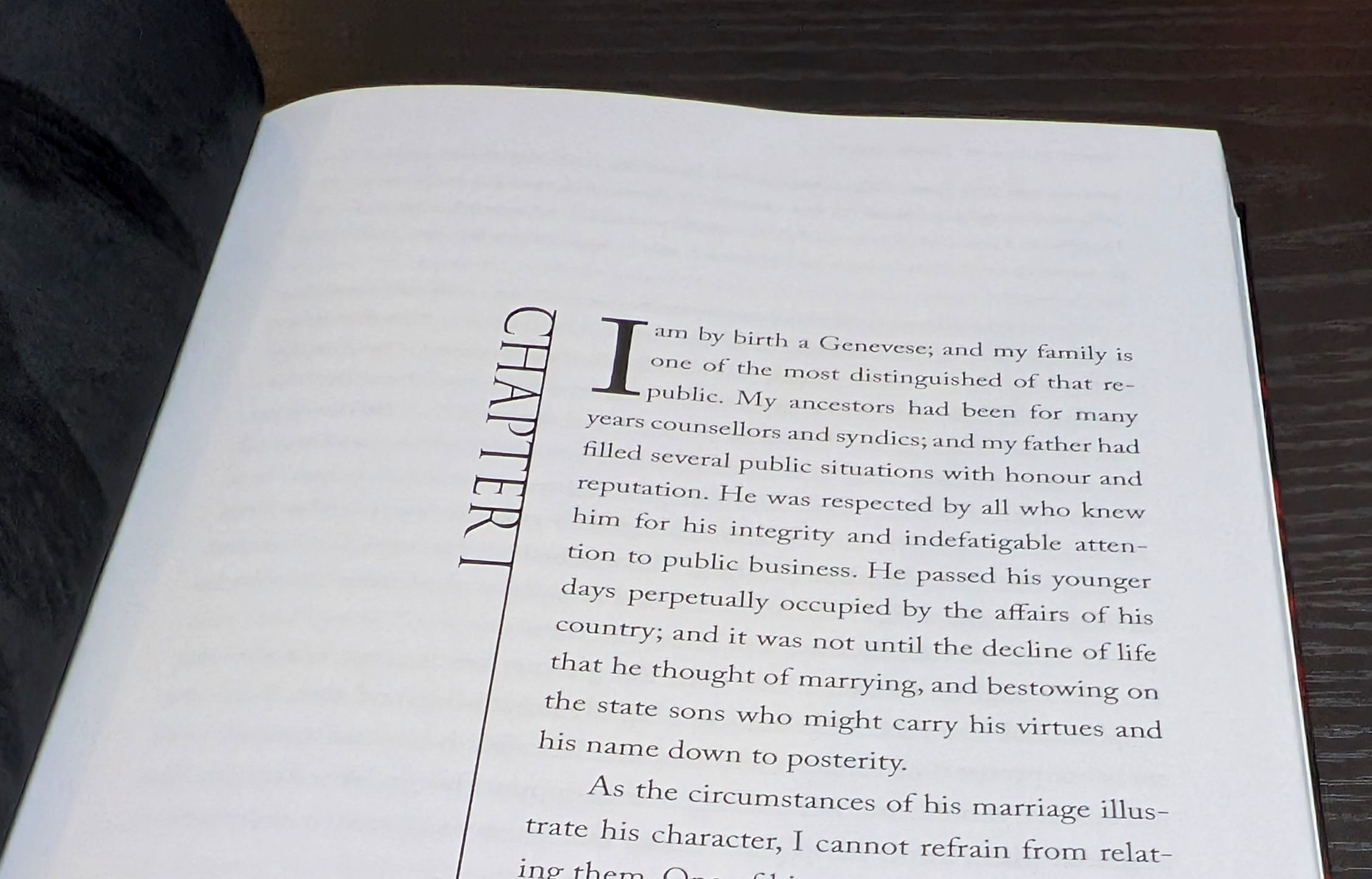
Typography, layout, spacing—these aren’t decorative. They’re rhetorical. Margins create breathing room for complex ideas. Line spacing determines whether we rush or pause. Font choices establish tone before a single word registers consciously.
I wanted readers to slow down. To feel the weight of Shelley’s language. To have space to sit with the philosophical density she packs into every chapter. The design needed to support contemplation, not consumption. Every margin, every type choice, every bit of white space is in service of that goal.
This is architecture for thought.
Period Anatomy as Visual Theory
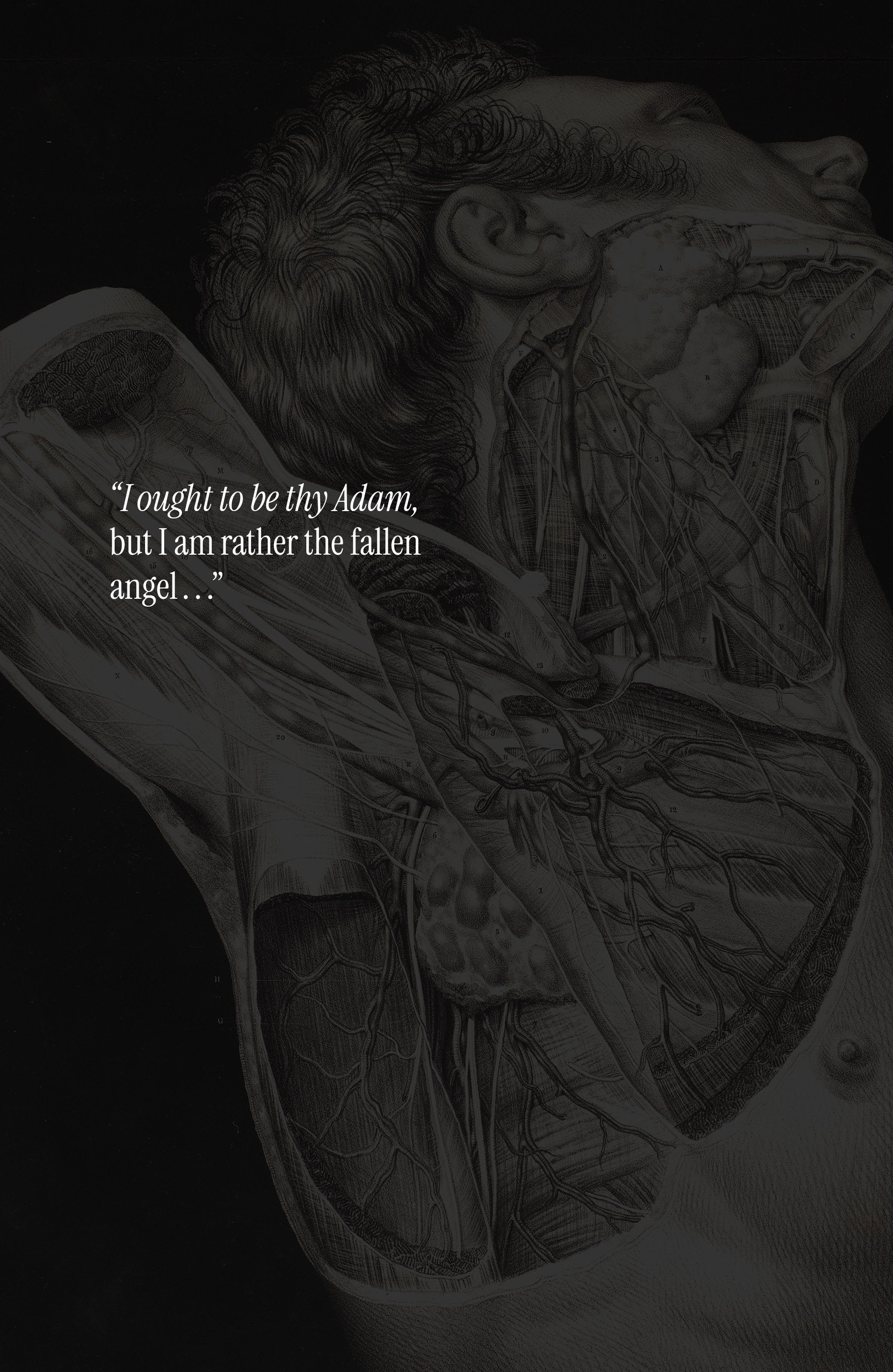
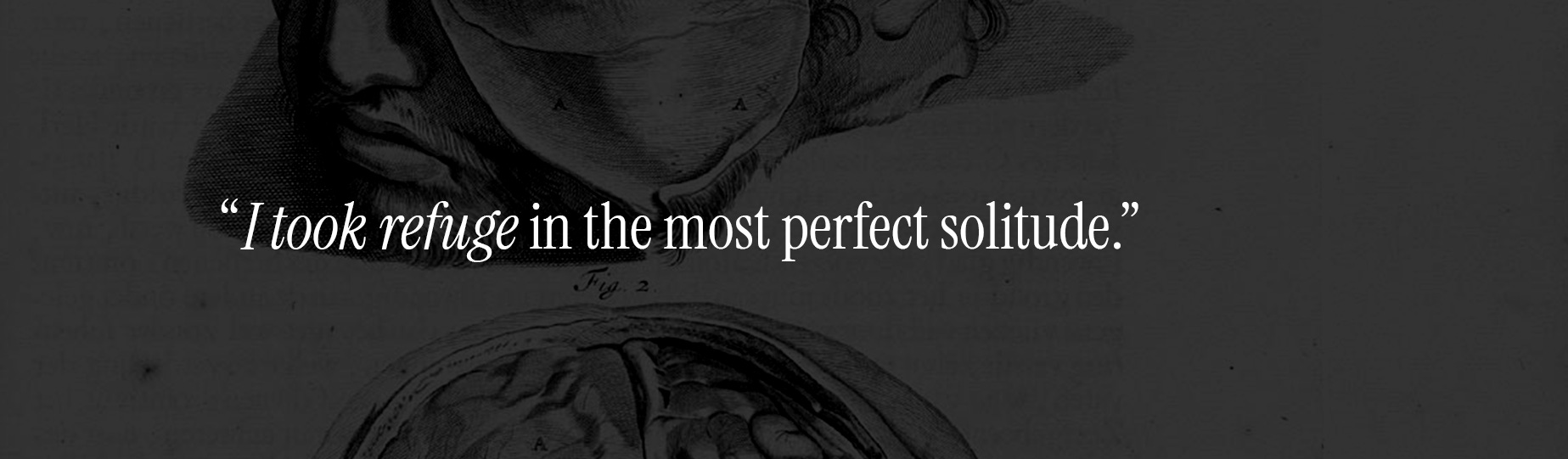
The 36 illustrated quotes throughout the book pair Shelley’s most haunting lines with contemporary anatomical illustrations—all public domain, all from roughly her era. This isn’t ornamentation. It’s a theoretical argument about the novel’s actual concerns.
Here’s why this works: Shelley wrote Frankenstein at a moment when anatomy and medical science were exploding. The understanding of human physiology was advancing faster than ethics could keep pace. Anatomy theaters were popular public entertainment. Dissection was both scientific necessity and gothic spectacle. The gap between knowledge and wisdom was never wider.
The anatomical illustrations of that era are remarkable—detailed, beautiful, and deeply grotesque. They don’t sanitize. They show the visceral reality of what bodies are when you strip away life and pretense. Muscles like rope. Organs in stark isolation. The mechanical truth of mortality.
Every illustration in this edition forces us to remember: Victor wasn’t working in metaphor. He was working with bodies. Actual flesh. “The dissecting room and the slaughter-house furnished many of my materials.” The charnel house. The grave. This is body horror rooted in the physical reality of what it means to assemble life from death.
The illustrations return the reader to that tactile dread—the awareness that creation at this level is about matter, about flesh, about the stuff we’re made of and would rather not contemplate.
The Cover: Multiplicity and Monstrosity
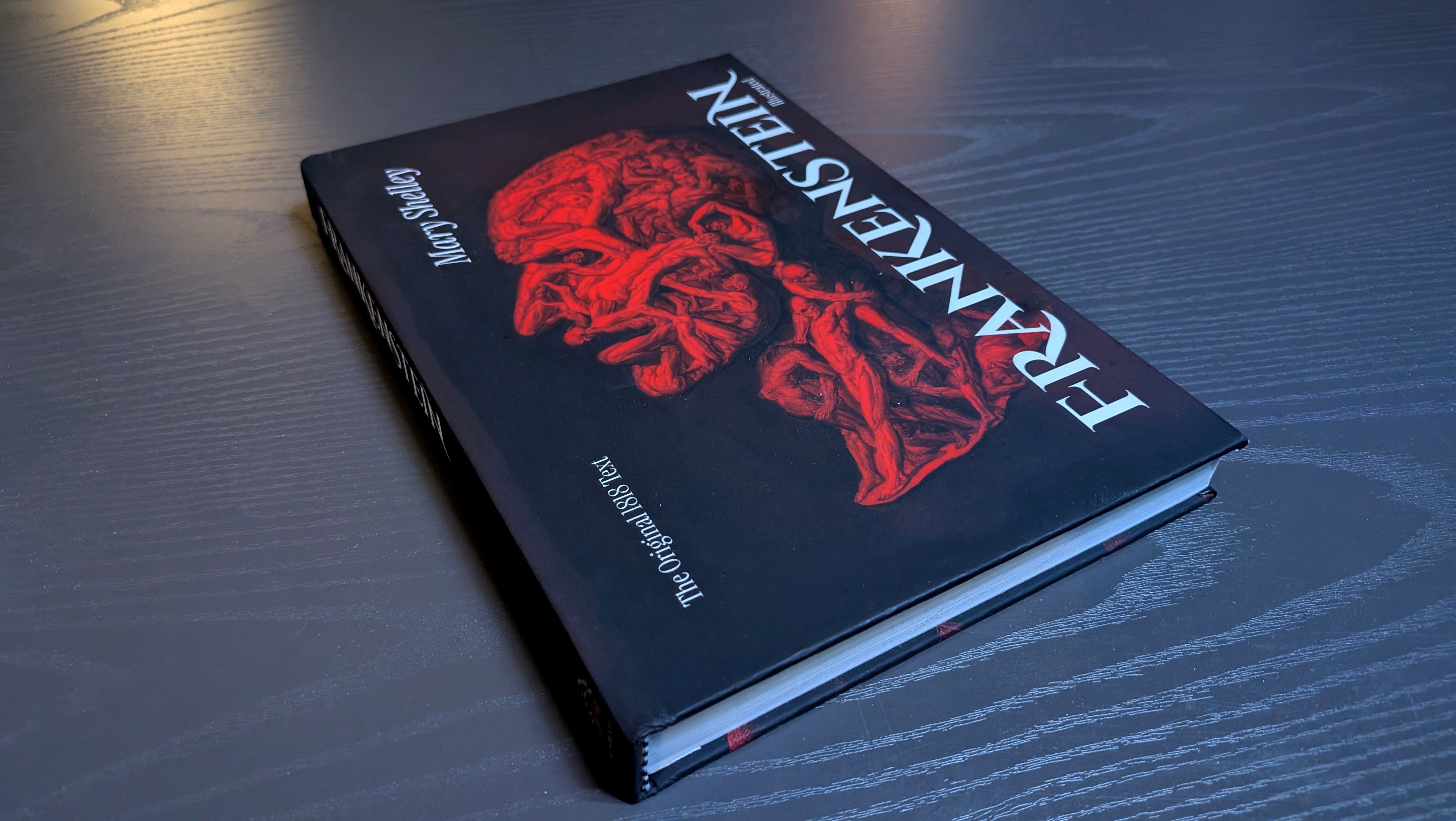
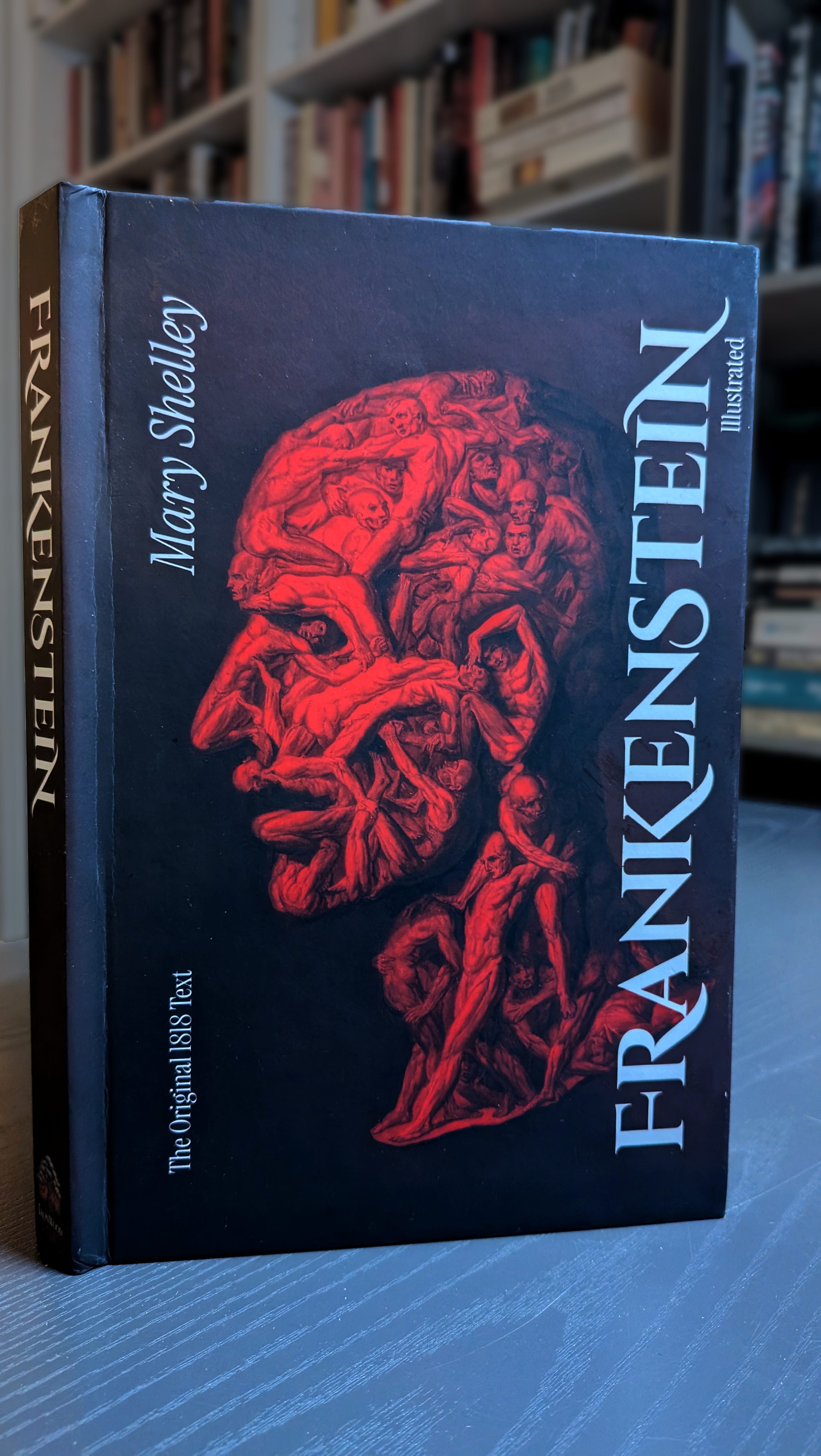
The cover image is “Anatomical Head, Testa Anatomica” by Filippo Balbi, 1854. You’ll see it in the photos, but let me tell you what you’re looking at: a human head composed entirely of male anatomical bodies, figures wrapped and entangled and layered to create the appearance of a single face.
It’s perfect for Frankenstein because it literalizes the central horror: the Creature is a composite. Multiple bodies. Multiple deaths. Various representations of humanity bound together into something singular and unprecedented. The cover makes visible what the novel makes terrifying—identity isn’t singular, creation is assemblage, and the question of what makes a being a being becomes horrifying when examined at the level of parts.
Balbi’s image also does something else: it shows how multiplicity can create the illusion of unity. From a distance, one head. Up close, dozens of bodies. That’s the Creature’s existential nightmare—composed of humanity but denied human recognition. Made of us but not allowed to be one of us.
Shelley at Nineteen
Mary Shelley was nineteen when she wrote this. Nineteen, and she created the foundational text about maker responsibility, about what we owe to what we create, about the ethics of abandonment.
And she knew exactly what she was doing. The 1818 text is philosophically rigorous in ways the revision softens. The Creature’s speeches are devastating. Victor’s self-justifications are transparent. The whole structure asks: what happens when brilliant people create something and then refuse accountability for their creation?
In 2025, that question isn’t academic. AI ethics. Genetic engineering. Environmental catastrophe. We’re living in Victor’s world—surrounded by powerful creations, their makers disclaiming responsibility, consequences cascading beyond control.
The 1818 text doesn’t offer comfort. It offers warning. And this edition tries to present that warning in a form that makes you feel its urgency—through the text Shelley originally wrote, through the breathing room to engage with its complexity, through the visceral reminder of what creation looks like when you’re working with actual bodies and actual consequences.
The Labor of Making
Like Victor, I assembled this from various parts—typography, illustrations, layout choices, textual scholarship. The obsessive attention to detail, the late nights, the conviction that every element matters because form and content aren’t separate. But unlike Victor, I’m not abandoning my creation to wreak havoc on the innocent. The parallel isn’t lost on me, though: the compulsion to make something that doesn’t yet exist, the belief that how you make it matters as much as what you make.
This edition is the book I wanted to read. A version that honors Shelley’s original vision, that makes space for her philosophical density, that reminds us of the material horror at the heart of the story, and that presents the whole thing as a unified argument: about responsibility, about bodies, about what we owe to what we make.
I hope you find it as compelling to read as it was compulsive to create.
Make It Yours
If you want this edition—the 1818 text, the anatomical illustrations, the design that makes you slow down and actually engage with Shelley’s language—it’s available now. Both hardcover and paperback editions just launched. This is the version I’ve been describing: 36 illustrated pages, period anatomy engravings, typography built for contemplation rather than consumption, and most importantly, the text that holds Victor fully accountable for his choices. The book I wanted to read, now available for you to hold, annotate, and grapple with. Get it, read it, and tell me what you think.
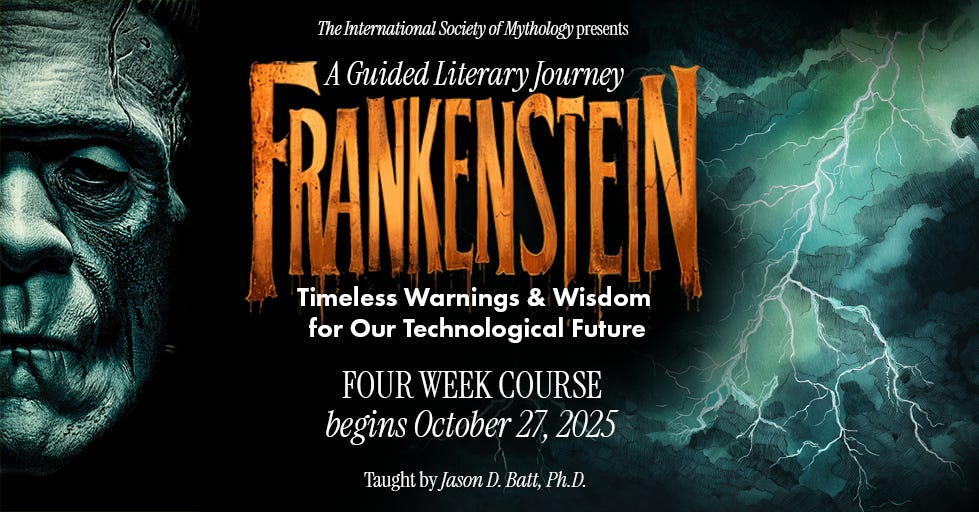
From Page to Practice: The Four-Week Deep Dive
And if this discussion of maker responsibility, AI ethics, and what we owe to what we create has you thinking—I’m teaching a four-week course on exactly these questions through the International Society of Mythology starting October 27th. Frankenstein as Living Mythology takes the 1818 text and puts it in direct conversation with CRISPR gene editing, AI consciousness debates, the alignment problem, and transhumanism. Monday nights, 6-8pm Mountain time, four weeks. We’ll read closely, think philosophically, and examine real-world case studies where Victor’s mistakes are being repeated in 2025. Because Shelley wasn’t writing a period piece—she was writing a warning about any era where knowledge outpaces wisdom and creation outpaces responsibility. That’s us. Right now. Join me if you want to think hard about what responsible “Frankenstein science” might actually look like.
Use code PROMETHEUS for 15% off—because if you’re going to steal fire, at least get a discount.